

Books for sale on this site, go to the Order form Section
Books that I have authored ou co-authored or those for which I have assumed the direction of the collective or been part of a collective of less than 10 authors.
The cost is very reasonnable and excludes postage.
Free reading but the reproduction...
All texts* on this Web site, signed by Janick Belleau, are available to Internauts... as long as, in all reproduction, written or verbal, the name of the author and the source are quoted.* The word "texts" comprises feature articles, reviews, interviews, presentations, poems, prose, etc.
Note written on November 8, 2016 but applicable for all texts.

Haiku

books
2011. T’aimer, voyager / To love you, to travel
Bilingual artist book (hand made) comprising 62 haiku and tanka by JB ; concept and 17 illustrations by Claire Dufresne.
Limited edition of eight copies numbered and signed by the artist and the poet.
ISBN : 978-2-9812573-0-7 ; legal deposit: July 2011
Copies in the Conservation Collection at the Bibliothèque & Archives nationales du Québec in Montréal and at Library & Archives Canada in Ottawa.
Towards the end of November 2011, one may consult a copy of the book on site in the Diffusion Collection in the BAnQ in Montréal located at 2275 Holt Street.
Click here to see the Cover and the case T'aimer,voyager, To love you, to travel; Production Sheet in French
For more of Claire Dufresne’s art books and sculpture-books, please visit her bilingual gallery-workshop: Ming Virtual Gallery
2008. Regards de femmes – haikus francophones. Lyon et Montréal
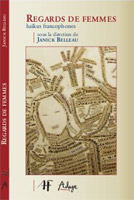
Second printing available since mid-June 2009
Direction of JB. Collection of 283 previously unpublished haiku and tercets by 86 French speaking women authors and of 14 illustrations by various women artists. A world-first because it is the only book giving voice to French haiku women poets. Topics: friendship, family, the passages of life, society, the future of the planet.
A study by JB precedes the main body: Francophone et féminin, le haïku (Haiku, French and female) which is a brief history of haiku written in French by women since the beginning of the XXth century. The study ends by a proposition of androgynous writing.
Web site of Publications Association francophone de Haïku and Diffusion Adage.
The Author has recovered 100 % of her copyright.
2006. L’Erotique poème court / haiku, Brussels
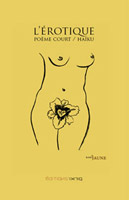
Co-direction by Janick Belleau and Micheline Beaudry. Collection of 77 French-speaking poets and 182 of their previously unpublished short poems; 9 illustrations by Line Michaud. A world-first: haiku in French, original language, perpetuating the traditional Japanese theme of eroticism. Finalist for the Belgian Literary Prize, The Salt of the Readership (Le Gros Sel du Public), an award granted to works to which traditional media pay little or no attention.
2003. Humeur… Sensibility… Alma… – haiku / tanka.
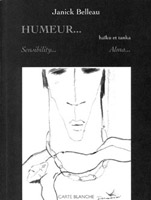
Please, read the details in the Sappho section.
feature articles
2012. LYNX, a Journal for Linking Poets
Personal Reading Notes from Janick Belleau about The Blue Planet, Multilingual Haiku Anthology, edited by Kimura Toshio, Tokyo, 2011
To read the article published on Jane Reichhold' site, please click The Blue Planet, anthology edited by KIMURA Toshio reviewed by Janick BELLEAU
2008. Haiku Canada Review
Canadian Haiku Women Pioneers (1928-1985)
Portrait of 12 women pioneers of haiku in Canada and their achievements: Simone Routier, Claire Pratt, Joan Giroux, Catherine M. Buckaway, Mildred A. Rose, L. Pearl Schuck, Betty Drevniok, Margaret Saunders, Jocelyne Villeneuve, Ruby Spriggs, Ava Kar (Anna Vakar), Dorothy Howard.
Canadian Haiku Women Pioneers for Haiku Canada Review, 2008
Review by William J. Higginson, Worldfield Haikai Pub US
2007. Haiku Canada Review
Penny Harter, American Poet and Haikuist – in her Own Words
Interview focusing on basic rules of haiku – rules formulated for teachers by the poetess in 1985 in her text « A Lesson Plan That Works » which appears in William J. Higginson’s book for which Harter collaborated: The Haiku Handbook. Does the poetess still follow these rules, a few decades later?
2006. Penny Harter, American poet and haikuist - interview
Here is an interview that Ms Harter gave to Janick while in Québec City, Canada with William J. Higginson, in the Fall of 2006. To read, please click Interview with Penny Harter by Janick Belleau.
This PDF is this writer's copy.
2006. Fredericton. Revue Ellipse Mag 77
JB, guest editor of the Section, Written in the feminine. Some definitions (haiku, senryu, tercet) and presentation of 6 women poets (isabel Asúnsolo, Blanca Baquero, Micheline Beaudry, Anne-Marie Labelle, Angèle Lux et Monika Thoma-Petit) and of some of their previously unpublished haiku; plus, 16 haiku by JB.
Translation from French mainly by Jo-Anne Elder.
presentations
2019. Haiku from Québec: Gaze, Music, and Silence
At the Festival Sakura Meguro International Haiku Circle in Tokyo (from 1st to 6th of April 2019), Janick delivers a presentation.
Haiku from Québec: Gaze, Music, and Silence
© Janick Belleau, 2018 – Greater Montreal Area, Canada
Translation from French to English, except for the poems: Jo-Anne Elder
Translation from French to Japanese: Keiko Tajima-Rossignol
Foreword
My talk today is a tribute not only to the Gaze but also to Music and ultimately to Silence. My inspiration for these three themes comes from three Québec women poets – Anne-Marie Labelle for the gaze, Diane Descôteaux for music, and Luce Pelletier for silence. These three writers work mostly in haiku, although they also make forays into other Japanese forms.
Because haiku is a poetic form that lends itself particularly well to this exercise, I want to share my own interpretation of several of the haiku I’ve selected here. My reading of these poems may be out in left field; I take full ownership of my insights or mistakes. The writers retain full ownership of their work and their intentions.
Before I start, I should say that I used only one reference to develop my talk: Christine Dupouy’s La Question du lieu en poésie (Place in Poetry) focusing on her chapter entitled “Entre regard et chant” (Between the Gaze and the Song).
2014. Haiku in Quebec - tentative definition of haiku outside of Japan
Annual Weekend of Haiku Canada in Ottawa.
JB's presentation - Haiku in French Canada: adapted Japanese-style or somewhat free-style? The views of four respected haiku poets (André Duhaime, Jeanne Painchaud, Micheline Beaudry, Francine Chicoine), and a tentative definition of haiku outside of Japan
Haiku in Quebec - definition of haiku outside Japan - Janick Belleau
2013. Contemporary Haiku Women Poets in Japan, France, Canada (French & English)
Talk given to members of Modern Haiku Association in Tokyo, October 2013.
Interpreted in Japanese by Kimura Toshio
Japanese Haiku read by Abigail Friedman
Modified initial talk given to Haiku Canada in 2009 to include only contemporary Japanese women poets and French women poets along with French and English Canadian poets of Haiku. To read Contemporary Haiku Women Poets in Japan, France, Canada (French & English) - Janick Belleau
2013. French Canadian Haiku and a definition of Haiku outside Japan
Within the Festival of International Haiku of the Meguro Circle (October 8-12) in Tokyo, Janick gives a conference. Title: Haiku in French Canada: adapted Japanese-style or somewhat free-style? – The views of four respected haiku poets, and a tentative definition of haiku outside of Japan. (The selected poets are: André Duhaime, Jeanne Painchaud, Micheline Beaudry and Francine Chicoine)
Talk in English (translated from French by Maxianne Berger) followed by a Questions/Answers Period. Talk translated in Japanese by SAEKI Junko.
To read, Haiku in French Canada - definition of haiku outside Japan - Janick Belleau
2010. Haiku Canada Weekend in Montreal
JB's talk: Panorama of Haiku (1998-2009) - the vision of Francophone poets and thinkers in France (Alain Kervern, Maurice Coyaud, Corinne Atlan / Zéno Bianu, Jean Antonini, Dominique Chipot, isabel Asúnsolo / Éric Hellal); in Québec (Dorothy Howard, André Duhaime, Robert Melançon, Francine Chicoine); and in Belgium (Serge Tomé).
Beginning of talk: I approach the state of contemporary haiku practically, letting Francophone poets and thinkers remind us of their vision.
How> My method isn’t as exhaustive as that of other poets such as Andrea C. Missia and Max Verhart. Rather, I created a list from my personal library of anthologies and collective works published over the last ten years. I favoured the works introduced with a preface, a foreword or an introduction giving a short or long definition of haiku. They are authors or co-authors who have written these texts-definitions. Their words have been faithfully transcribed and objectively analyzed. Chronology is by year of publication.
My paper flows as follows: first, I quote, in their own words, Francophone poets and thinkers who describe the characteristics of haiku according to their definition of it. Second, I clarify the words, phrases, snatches of sentences, if necessary, when there is a ‘yes’ in the appropriate column of the spreadsheet.
Then, comes a conclusion.
The Spreadsheet: Eleven characteristics define haiku, beginning with the columns Poem, Brevity, etc. These are the words appearing regularly in the above-mentioned Prefaces. The characteristics are classified according to the form and content of haiku: the first five are the form, i.e. the structure; the last six are the content, i.e. the spirit.
2009. Canadian Haiku Women and Inner Thoughts
Haiku Canada Annual Weekend Conference in Vancouver at the University of British Columbia (UBC)
Presentation: Canadian Haiku Women and Inner Thoughts
Abstract: Themes favoured by haiku women, whether they are French, English or Japanese, are recurrent. The talk concentrates on the intimate thoughts of Canadian women poets while being busy with everyday tasks. Haiku in French, read by Micheline Beaudry, Diane Descôteaux and Jessica Tremblay also present for the week end conference.
To read full talk Canadian Haiku Women and Inner Thoughts - Janick Belleau
NB : Travel at our expense
2008. Women and Haiku in French, Thematic Evolution
Annual Weekend of Haiku Canada at the Carleton University in Ottawa
Presentation: Women and Haiku in French, Thematic Evolution
Abstract: What are the characteristics of women’s writing? The most recurrent, those defined by Western women theorists since 1974, are examined: first person subject, one’s own body (often dealt with humour), the everyday, and the mother-daughter relationship. There are also newer themes of friendship, environment and society. Presentation concludes by submitting that the concept itself of women’s writing is constantly evolving, giving way in some instances, to androgynous writing.
To read Women and Haiku in French - Janick Belleau
NB: travel at our expense
2007. Canadian Haiku Women Pioneers
Three organisations, three presentations of the same paper: Canadian Haiku Women Pioneers, 1928-1985 :
Meguro Haiku International Circle led Yasuomi Koganei (October 13);
Modern Haiku Association led by Toshio Kimura (October 14);
and Meiji University, Center for International Programs for Prof. Yoshikazu Obata ’s classroom (October 17).
Canadian Haiku Women Pioneers - Janick Belleau
Deep bow to translator and poet (from English to Japanese), Ms Emiko Miyashita who also served as interpreter for the first two activities.
NB: Heartfelt thanks to the 3 organisations and to A. F. to have paid most of my expense.
2007. Canadian Haiku Women Pioneers
Haiku North America Annual Conference in Winston-Salem
Presentation: Canadian Haiku Women Pioneers - (1928-1985)
Abstract: Some women pioneers devoted a great part of their creativity to writing haiku and to publishing their texts; others devoted their creative energy to promoting haiku by writing critical studies, publishing literary reviews, mentoring or being elected executives the national association, Haiku Canada.
Canadian Haiku Women Pioneers - Janick Belleau
NB : trip at our expense